Monday, July 7, 2008

garden planning

Today I buried the innards of the roosters and a bucket of bokashi in the old tobacco patch. There were worms, but only a fraction of the volume of worms I found in the blueberry patch a few days ago. The difference is that the blueberry patch has had bokashi buried in it mere weeks ago and it has had compost (a mix I made comprising mostly horse poo and pea straw) layered over top with pine needles for the final layer. So I'm expecting that today's bokashi will do good things for the worm numbers.

The old tobacco patch is 1.0 x 4.0 metres. The one metre width seemed a perfect size at the time that I created the bed, but I forgot that due to the boundary fence on one side, I would only be able to access the bed from one side. So today I found I had to stand on the actual garden in order to do some of the digging. Which is really really bad according to almost every organic gardening text I have ever read. I think one way of minimising the soil compaction risk is to plant perennial herbs against the fence and then have annual vegetables at the front. I believe lady flower gardeners would turn such a spot into a herbaceous border. Sniff and snort.

I've got a few options of herbs to put along the fence and then I'll plant potatoes in front. This is where the glass house will go eventually but for the moment I'm not letting that shape my planning. We're prioritising building a lean-to for the firewood this summer and completing some more insualtion tasks. I don't think we'll have a functional glass house until 2010. We will have chooks by this Spring though, so all is coming along beautifully I think.

Midwinter

Even though it is the middle of winter, we are still blessed with much greenery and growth. The first photo is of one of the pungas in Brighid's forest. Favourite Handyman planted these pungas the day our daughter was born in January 2007.The second photo is of our broad beans. These beans don't get any direct sun in winter but they are growing well enough nevertheless. We haven't staked them all but they are (hopefully) fixing nitrogen anyway and I'm sure we'll get some broad beans to eat even if they are flopping on the ground. I planted them back in March.

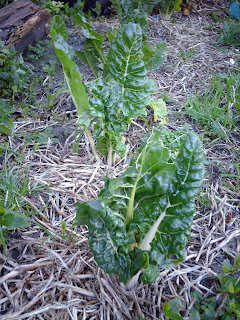
These swiss chard or silverbeets are growing in the shade also and seem to be doing well. This area was totally overrun by weeds and trees not too long ago and now we are eating off it. I chop some leaves off these plants each week for soups and stews.This fourth photo is beside the pungas and the silverbeet/swiss chard. I cleared it and buried bokashi in it and planted some beneficial insect blend seeds. Immediately, lots of onion weed germinated and colonised much of the area. I haven't got around to eating any onion weed yet, but I will.
Photo five is the corner of the invasive garden patch. You can see some silverbeet in the midground, our sad little attempt at a scarecrow in the background and in the foreground a wet patch where we left tyres and managed to kill the grass. I've buried bokashi in that spot and come summer we'll grow something to eat in it. It doesn't get more than a sliver of sun at the moment, but that will improve as the sun stays higher in the sky in coming months. We used the tyres for an experiment with growing potatoes last year but it wasn't successful and they are now laying around until I think of a good use for them. You have to pay to drop tyres off at the local landfill so I'll be making sure we think of a home-based use for them.

Sunday, July 6, 2008

Rooster killing

Favourite Handyman killed and plucked two roosters this afternoon. I gutted them and they are now hanging inside pillowcases in one of our outdoor sheds. Given the very cold weather, we have no concerns about them hanging overnight. Last time we killed roosters was a hot summer's day and we only hung them for an hour that time. The pillowcases mean flies cannot get at them.

When I went around to Raelene's to collect the roosters, she also had a big pile of "Lifestyle Farmer" magazines for me to borrow. Interesting reading so far. I took particular notice of an article on gardening through carpet, where the author laid manure over lawn/weeds and then laid wool carpet over that. Then she cut holes in the carpet and planted seeds or seedlings through the hole. She was very impressed with the results. I've ignored advice relating to recycling carpet before because I never come across any old carpet. But in a lightbulb moment this evening, I remembered that our childminder's husband is a carpet layer. I'll have a chat to Pete next week and see what my prospects are.

We don't get a lot of sub-zero temperatures where I live, but this week Jack Frost has definitely been calling. I think the tamarillo is going to become compost rather soon. Everything else is surviving okay.

At the end of this month I will have been blogging for one whole year. So now that a year of haphazardly labelling or not labelling my posts, it has finally dawned on me that I want a better system. Specifically, I want to be able to use my blog as a resource to check on what worked and what didn't for particular flowers/herbs/vegetables/fruits in previous years. So I'm in the midst of puddling round pushing some order into my labelling, even gunning for a system. This is a typical pattern for me for almost all ventures I undertake.

These are the labels I'm thinking of reorganising into: community, politics, vegetables, fruit, herbs, flowers, food, compost, recipes, gardening techniques. Could be a few more, such as my using up the cupboard project. But maybe I no longer need a label for Monty Don just because I mentioned him once which was really just because I fancy him, in an idle hot-garden-knowedgeable-man kind of way. Maybe.

Saturday, July 5, 2008

Blueberries and seaweed

After a week of thunder, lightning, hail and endless rain, it all stopped today. Very cold, but I own warm clothes and strode out into the garden this afternoon without any care for the state of the house. I planted the two blueberry plants I bought earlier this week. I bought two varieties: 'Blueberry Powder Blue' and 'Blueberry Rahi'. I had to buy two because these are rabbiteye types and require cross-pollination. The plentiful worm activity in the soil when I was planting the blueberries was very encouraging.

I then dug out the last of the tobacco plants and tipped the bags of seaweed I've been collecting over the last week over the vacated garden patch. Using loppers and scissors I chopped all the seaweed into pieces of about 10cm or less and left them scattered over the patch. Given the huge volume of rain we've received of late and will likely receive in coming weeks, I preferred to leave the seaweed to rot in like this rather than make a seaweed brew.

I've been reading that wood ash is very alkaline. Which particularly interests me because pine needles are quite acidic. So I'm thinking of collecting some more pine needles from the local rugby field sideline this week and layering them with the wood ash on my new compost spot. I will then top it with Raelene's discarded chook litter from her hen house.

Unless the weather improves and the roads to take Fionn to his grandparents' home open, tomorrow we will be killing, plucking and gutting two roosters. Other times I have put the feathers on the compost, turned the bones to stock (and eaten the meat obviously) and then placed the used bones in the rubbish bag alongside the various bits I gut from each bird. I am wondering whether we should toughen up a little more and bury those innards in the garden. They would probably do something good for the soil. The back garden is fenced off from local dogs and NZ doesn't have foxes, so there should be no risk of it all being dug up again. Wonder how deep I'd have to bury it...

Friday, July 4, 2008

The path to a brave new world?


Truckies have been protesting throughout New Zealand this morning. The single issue cause is the lack of warning about road user charges going up with immediate effect despite an assurance by transport minister Annette King that she would not do that. There are always a larger bunch of pressures which feed into a decision to protest on this scale, and the rising fuel prices which are driving truckies to the wall economically do seem the likely wider issue.

The oil crisis is threatening the livelihoods of truckies (truckdrivers). It is threatening their ability to feed their families and pay their mortgages. Of course they could find a new job, start a vege garden and become low fuel users and committed locavores. Kind of like finding God, but instead of going to church, they will devote themselves to lowering their footprints on this precious earth and reflect each day on the myriad ways in which they can serve the 'God' of the light footprint.

I'm not surprised that there are truckies all over the world protesting. Why should they go gently into the 'new world', give up their wordly possessions and starting sprouting alfalfa to sell on the roadside? Many of us who have an interest in the issues surrounding the increasingly limited supply of oil have indeed made changes. I and most people in my country, not to mention the rest of the world, lean heavily on the services of truckies.

I was pleased to see our democratic right to protest enjoyed and upheld on such an impressive scale throughout New Zealand this morning. Equally the right of citizens in a democratic country, some people have found this protest offensive and said so. I think it is the very tiniest reminder that such a radical change in society as some peak oil enthusiasts predict will not come about by people all finding their environmental 'God' and their peace beads and gently transforming our society.

The pain is not all about big business.

Feeding Melbourne's hungry, using not wasting food

Here is the original link where I found it. It is the best news I have encountered today. It is happening now, not once they can get it going. Now. I love it.


Monday June 30th 2008
It’s a common scenario the world over, especially in developed countries: thousands of people go hungry while tons of unwanted but edible food is heaped into landfills. One organisation in Australia has developed a novel scheme to correct this, one that provides meals for the disadvantaged and is also good for the planet. Marcus Godinho, the man behind it, explains:

It’s shocking to see how much good food gets thrown out. The goods that come to us are usually rejected because they’re close to their "best before" date; incorrectly packaged; weather-damaged; superseded by another line; or don’t fit society’s high standards, for example not complying with a certain size, colour or shape. We have an egg farm that regularly gives us eggs that are too large, too small or are double-yoked because the supermarkets don’t want them.

Apart from staples such as fruit and veg, we sometimes also get magnificent luxury goods, like smoked salmon or beautiful cheeses. Two weeks ago we were given 30,000 chocolate bars because some were heat-affected and had gone a bit pale. This made little difference to the appreciative people we gave them to. Not that you could call chocolate bars healthy, but everybody deserves a treat.

We cook with what we’ve got in the kitchen on any given day. While we’ve got regular boxes of food coming in, our duty chef and the band of volunteers who help him have to be on the ball, and very creative with some of the unexpected ingredients that we’re donated. Not long ago a catering company whose freezer was on the blink gave us 450kg of prawns. We collected them quickly, shelled them and made delicious quiches out of them.

But we don’t produce everything in our kitchen. Sometimes catering companies give us their surplus pre-packed sandwiches and rolls, as well as any freshly squeezed juices they have spare. There was a bar mitzvah over the weekend and the company catering for it dropped off 250kg of leftover lamb chops, wild barramundi and stir-fried chicken.

Lately we have seen an unprecedented rise in the demand for food. There’s the ongoing issue of homelessness (there are 20,000 homeless people in Victoria), but hunger isn’t something only faced by them or by people struggling with drug and alcohol addiction. The recent increase in interest rates and the price of petrol and food means there’s a lot of pressure on working households to make ends meet, and some people are struggling to put food on the table.

FareShare is about giving tangible emergency help to members of the community who are going through a tough time, and we get some fantastic support for the work we do. Our operational costs, such as wages, electricity and petrol are funded exclusively from philanthropic and corporate organisations, as well as private individuals.

We started seven years ago as One Umbrella. It began when Jewish Aid Australia, which rescued food and distributed it to agencies, joined forces with six people (one of whom was a chef) who used to meet every Saturday morning to make meals for disadvantaged people. Up until this year we worked from a kitchen which we shared with other organisations. This limited our capacity to respond to the high demand for food, the ever-growing offers of surplus goods and an expanding waiting list of volunteers.

But a recent extraordinarily generous donation has meant that we’ve been able to buy our own building, which will give us enormous scope to grow and provide more meals to people in need. Before we moved into our new premises in May, we made 700 meals a day. Now we can make 1500 an hour and plan to produce up to a million meals a year.

We support 55 agencies all over Melbourne and some regional areas with emergency food. They include soup vans, homeless shelters, school breakfast programmes and crisis centres. We’ve got a Cryovac machine that vacuum-seals food, which then just needs heating up. But we’re really inspired by old-time miners’ use of pastry to wrap up their dinners, which we now know as pasties, and would love to use it more often if we could get donors to supply it.

Pastries, pies, sausage rolls – all have distinct advantages for us. They are nutritious (we use lean meat and high fibre) and very portable. Our agencies find them easy to serve as they don’t have to worry about having adequate infrastructure, such as a kitchen and cutlery, or the washing up.

We have four paid staff and 100 volunteers a week to assist us with baking, as well as administration and driving. Some of the volunteers come to us from the corporate sector – there’s a trend among large companies to encourage workers to take time off and volunteer in the community.

Food safety is paramount: we haven’t had a single incidence yet. Donors themselves are protected from legal action under Victoria’s Good Samaritan Act, which is legislation that FareShare was instrumental in bringing about. This gives donors immunity from common law liability for food donated in good condition and good faith. As a result, last financial year, we rescued 140 tons of stuff going to landfill. This year the figure is closer to 280 tons. So not only do we protect the environment, we’re able to use that surplus to feed Melbourne’s homeless and hungry. I think it’s a great achievement.

• Marcus Godinho was speaking to Carmela Ferraro. For more information visit the FareShare website.

Tuesday, July 1, 2008

seed time

Shortest day has been and gone and I'm getting twitchy on the seed front. I've been looking at NZ seed catalogues online this evening and have also brought my seed box in from the shed. But before I tally what I already have, I have to share this picture which I found on the Koanga site.

This might be what you were referring to Nikki?


It is called Kale Lacinato. It doesn't look as big as the Cavolo Nero (walking stick cabbage) which in pictures which I've seen looks similar in leaf characteristics. I might just have to get Red Russian Kale and Kale Lacinato.

Here, for the purposes of harnessing my overly grand buying plans, is a list of the vegetable seeds I already have packets of.
Arugula
Beetroot chioggia
Broad beans exhibition long pod
Broccoli purple sprouting early
Bean borlotto fire tongue
Celery for cutting
Corn salad Verte de Cambrai
Carrot Touchon
Carrot White Belgian
Chicory Red Verona
Florence Fennel Romanesco
Kale Squire
Leek Carentan Giant
Mesclun lettuce mix
Mesclun organic salad mix
Mizuna
Onion White Welsh
Onion Red Brunswick
Pak choi Cash F1
Pumpkin Austrian Oil Seed
Radish gourmet blend
Beet bright lights
Beet Argentata
Tomato Sungold F1
Tomato Rainbow Blend mixture
Hmm, 25 packets of seed. I don't think we will starve even if we end up with no seed buying budget whatsoever. But I do have a few more things to add. Kale as aforementioned, plus a couple of varieties of zucchini, at least one more (primarily for eating the flesh kind) pumpkin, some peas, and some different tomatoes. Oh and more beans. I've reigned myself in on the onion experimentation front for the meantime. Some of the packets above served us well last year while others disappeared into ungerminated never never land.
Heavens knows where I'll fit them all. This doesn't include my herb list. I do covet a few flowers, but they are lower on my list and some may fall off.